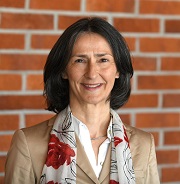
Astrid Kunze is Professor of Economics at the NHH Norwegian School of Economics in Bergen, Norway. The academic year 2022/2023, she was visiting as a research professor the University of California Santa Barbara and The Stone Center at University College London.
Her main research interests are labour economics, family economics, gender economics, and corporate governance. She is particularly interested in the causal effects of public policies on labour market behaviour and firms' behaviour. Kunze has conducted studies on the evaluation of parental leave policies, child care programmes and cash-for care policies, as well as the gender quota on boards. Her current research covers aspects of organisations and diversity in the firm. She is working with large merged administrative data applying micro-econometric methods.
She is a contributor to the Handbook on Women and the Economy published with Oxford University Press in 2018. Her research has been published in journals such as the Industrial Relations, Review of Economics and Statistics, European Economic Review, Labour Economics, Oxford Review of Economic Policy, Empirical Economics and Scandinavian Journal of Economics.
In 2020, Kunze received a 6-year grant from the Norwegian Research Council for her project titled Challenges to shaping an inclusive work-life in rapidly changing labour markets: Firms, human capital, and family policy.
In 2022, Kunze was awarded the Inaugural European Economics Association Teaching Award (Senior) for exceptional teaching. The jury consisted of two EEA Council Members and the Education Committee.
She holds a Ph.D. from University College London and an MSc from University of Bielefeld. From 2000 to 2002, she was employed as a Research Associate at IZA. Before her academic career, she completed a vocational training and business programme with Bayer AG in Leverkusen (Germany).
Other research interests: Applied Macro-Labor Economics, Corporate Governance, Strategic Management
Kunze is an Associate Editor of the European Economic Review.